
The Inaugural Black Blues Culture Convening
Black Blues Culture is a series of immersive convenings connecting the historical richness of blues with contemporary artistic expressions.
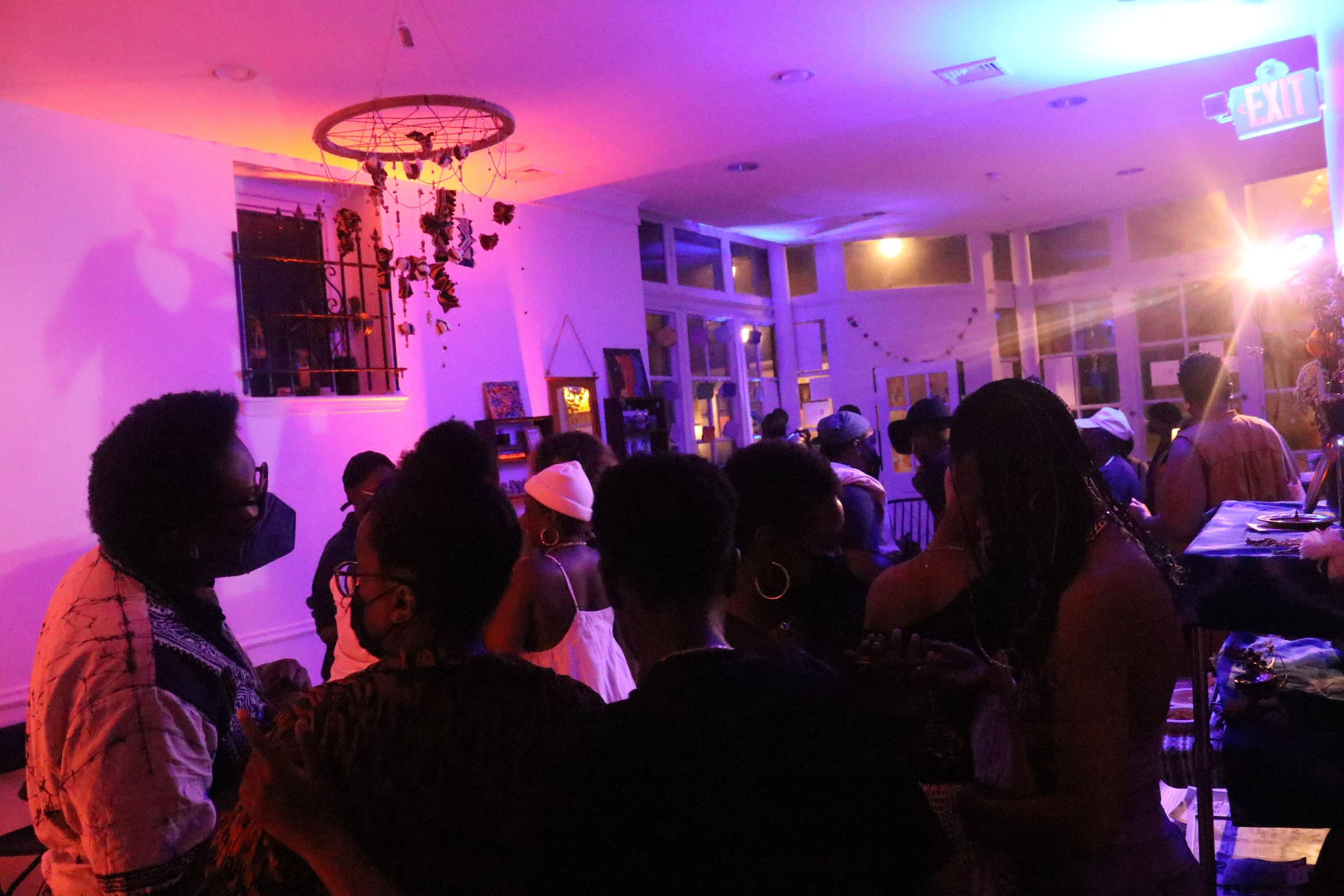
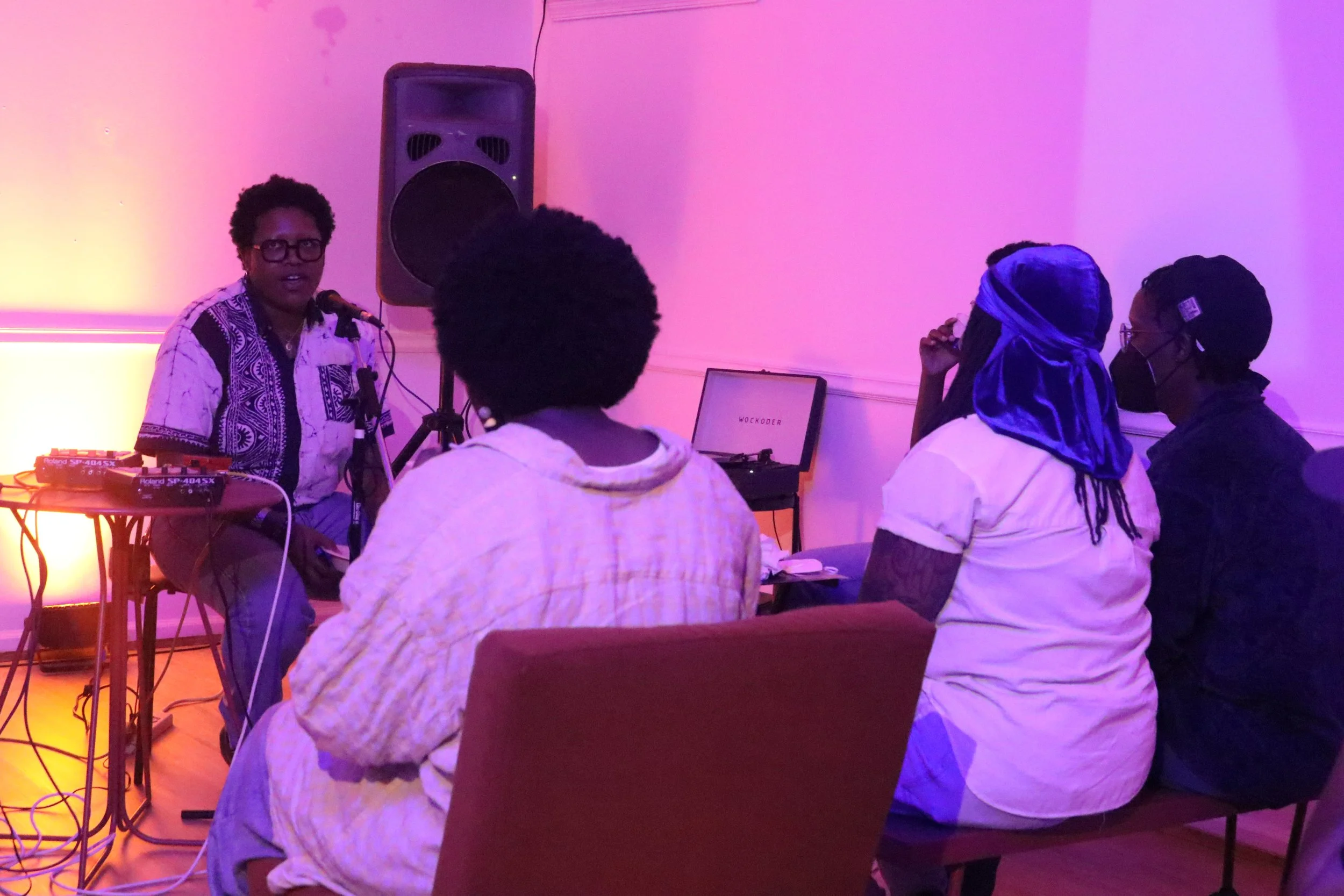
Evoking the clandestine charm of speakeasies, audiences are invited to bear active witness as performers dive into the soul-stirring melodies and narratives, and become threads in the fabric of a contemporary Blues world.

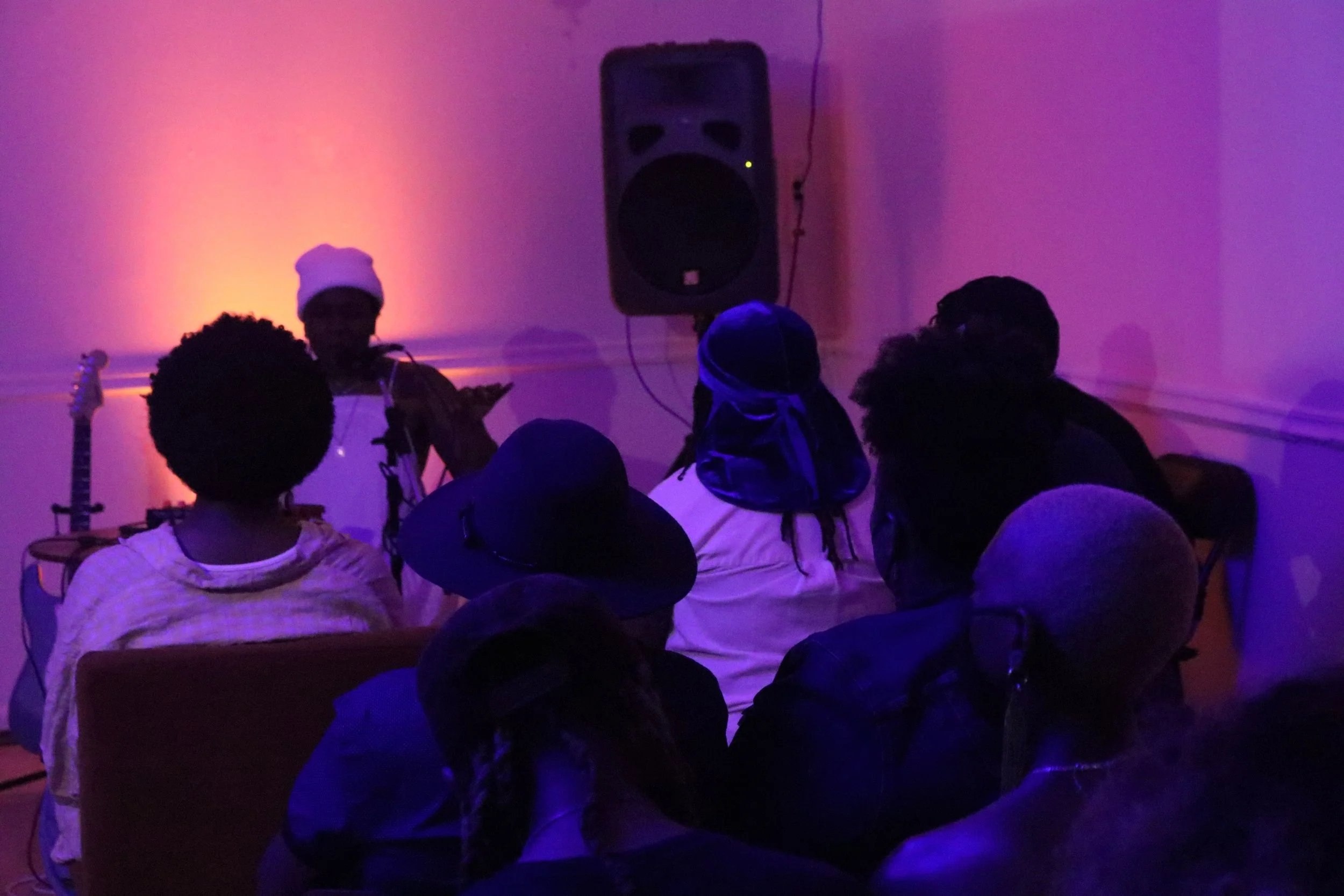
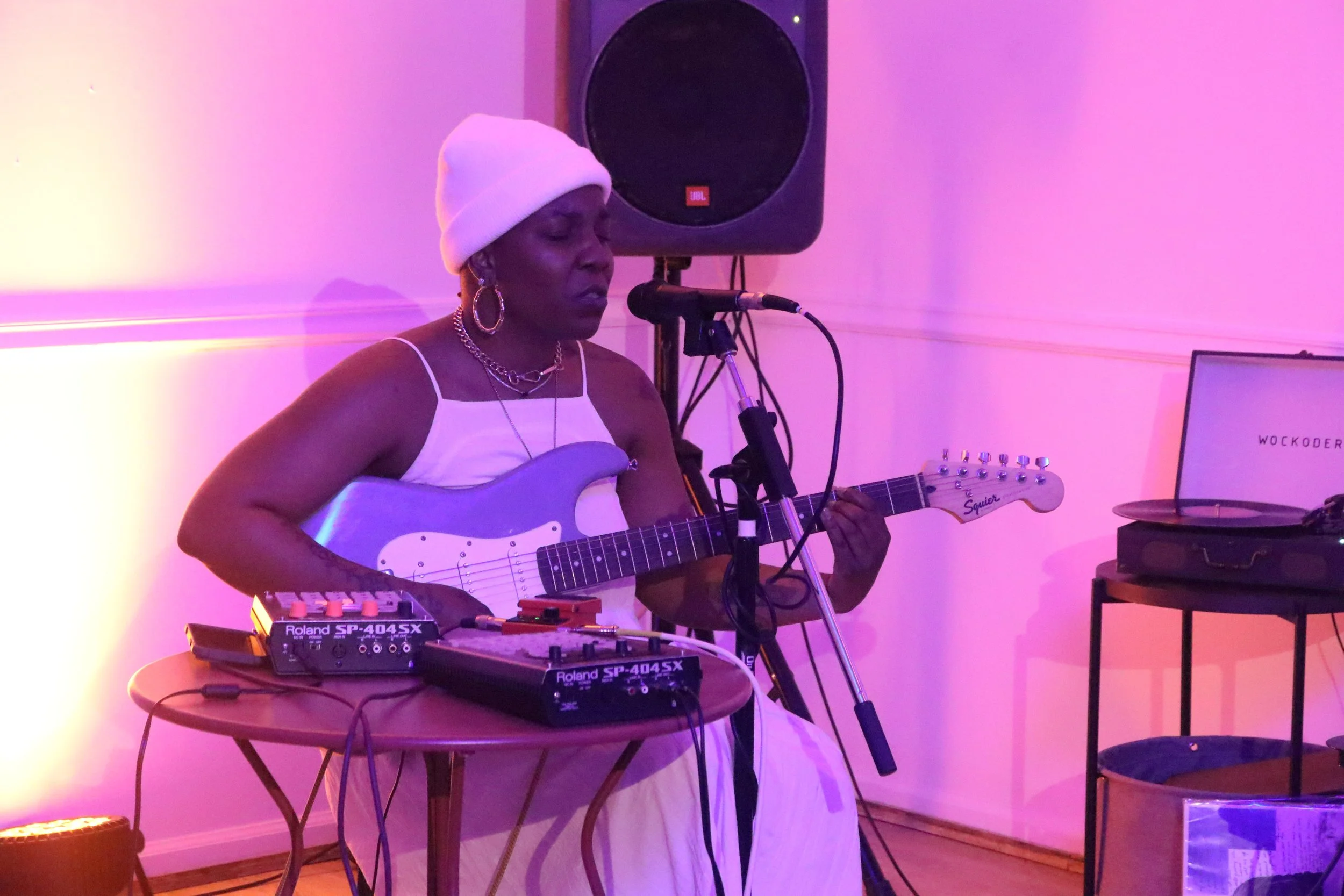
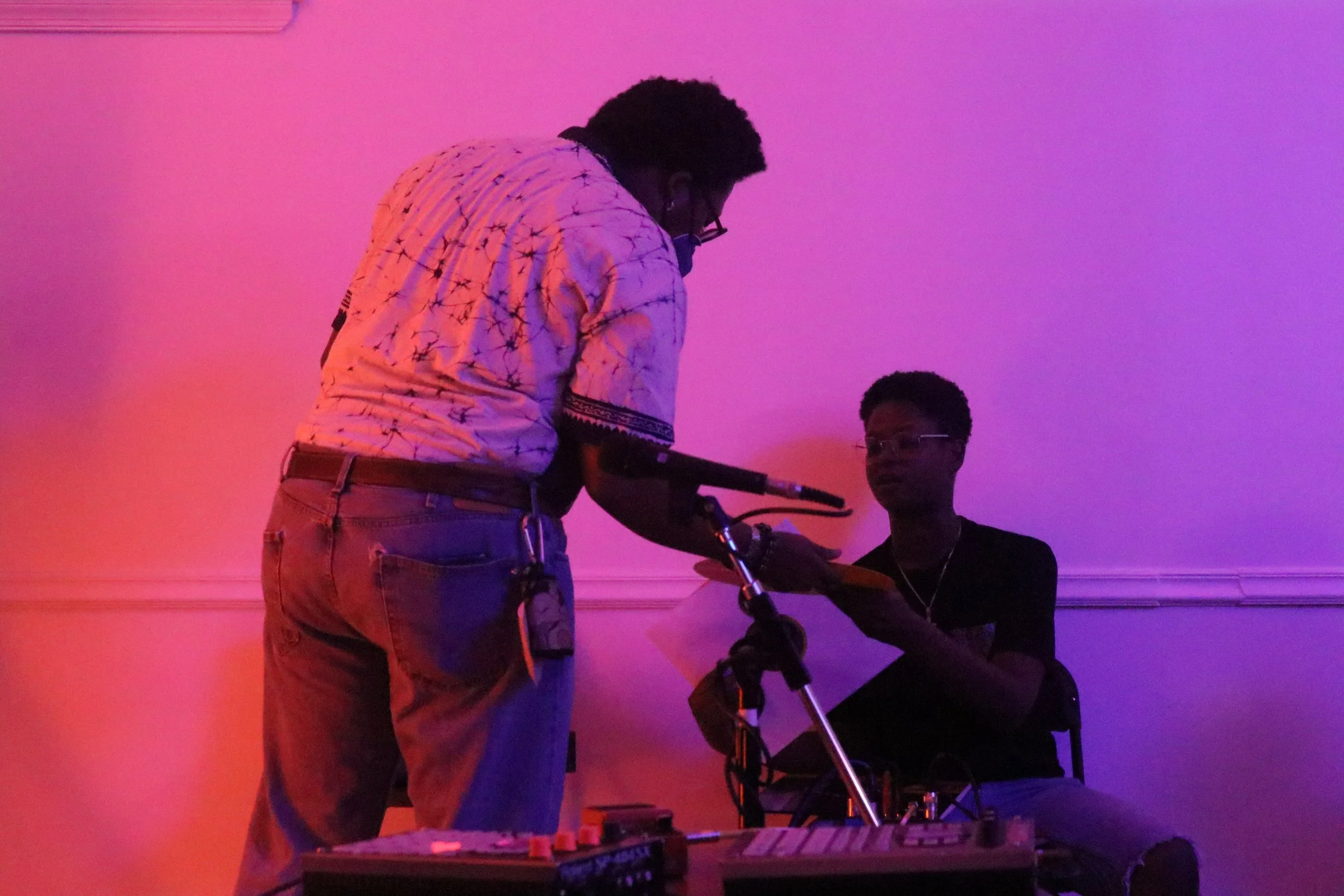
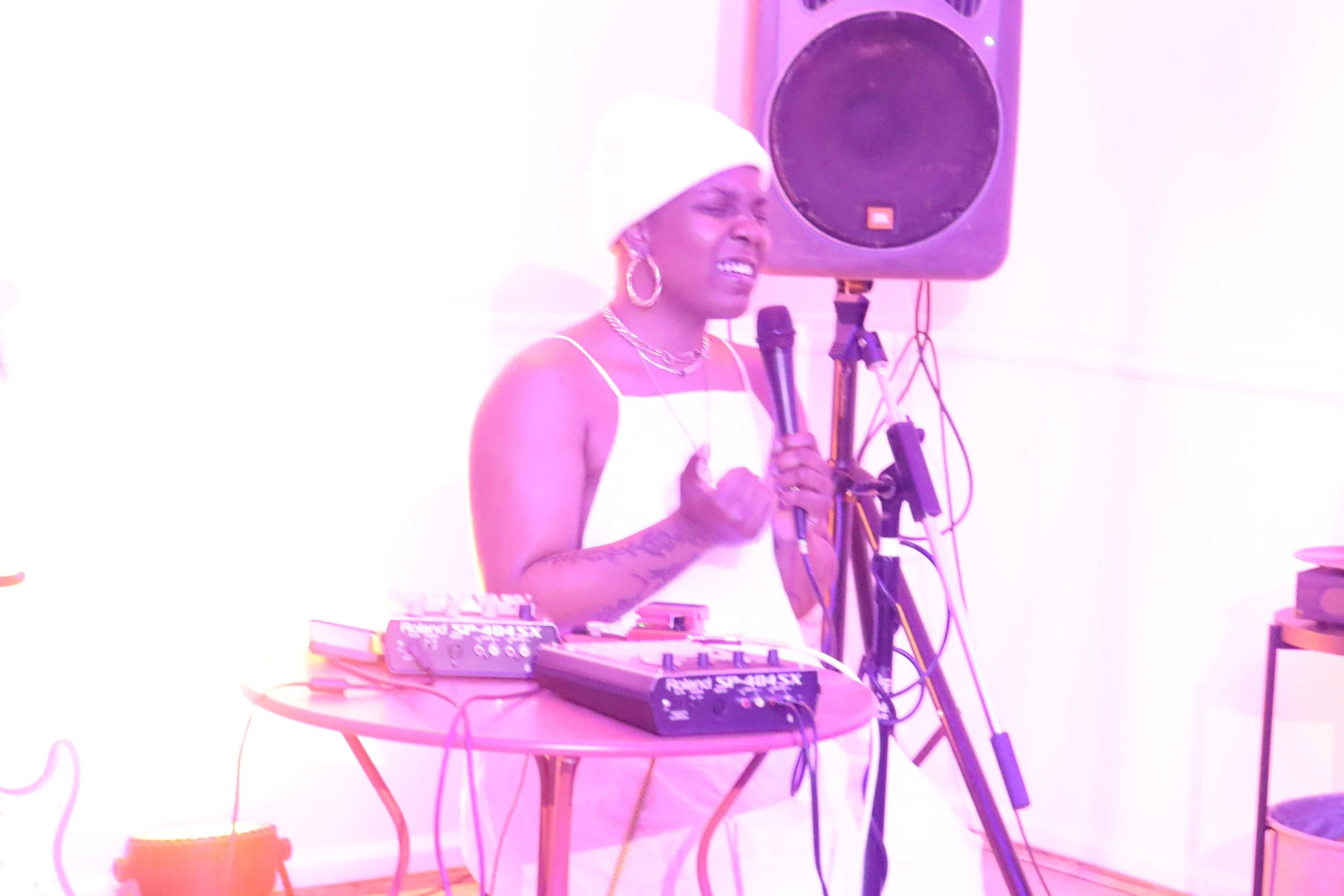
100 years after the roaring 20’s, we have re-entered the 20's
Contemporary Queer artistry deserves it’s true context— in light of the historical legacies of those who came before .
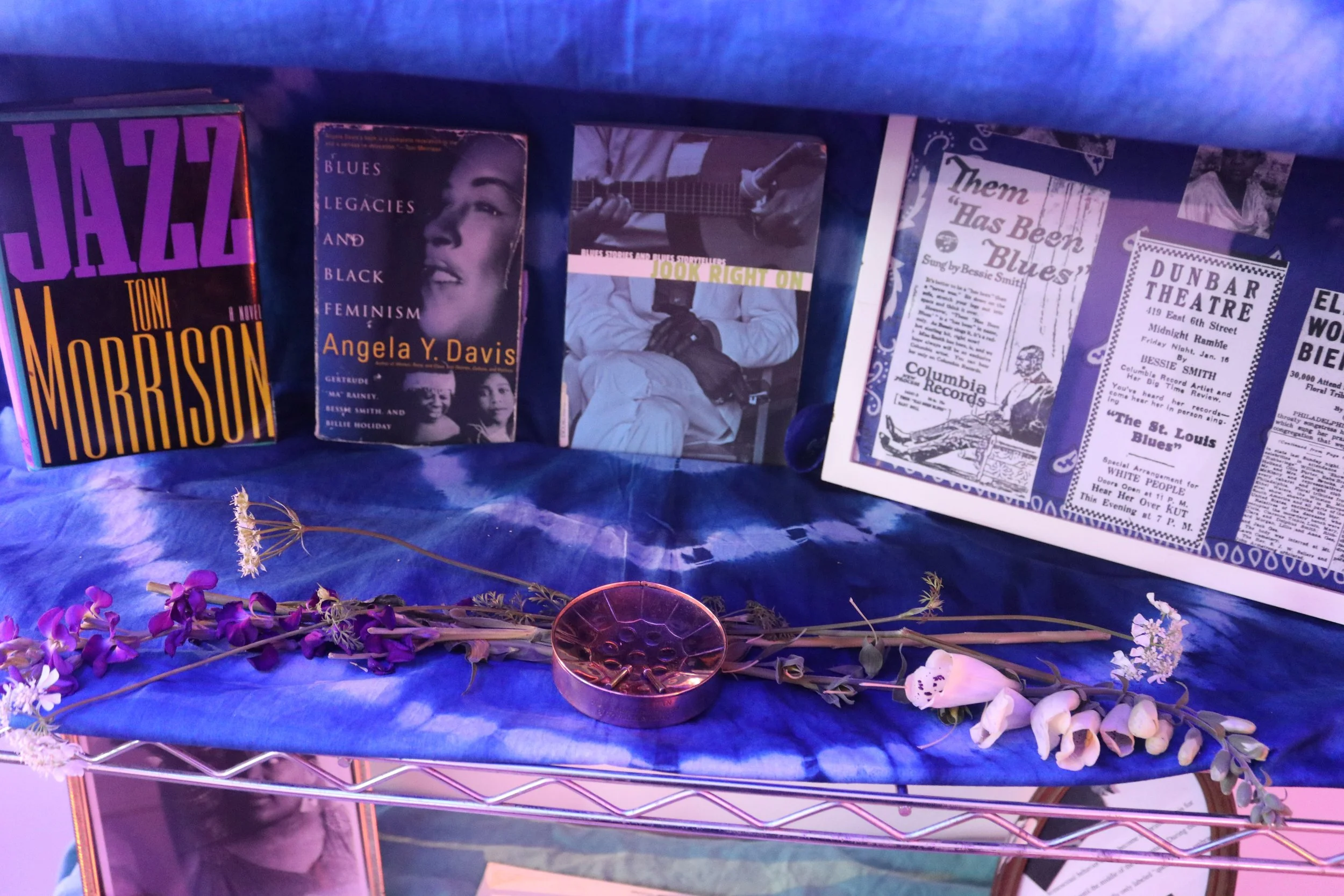
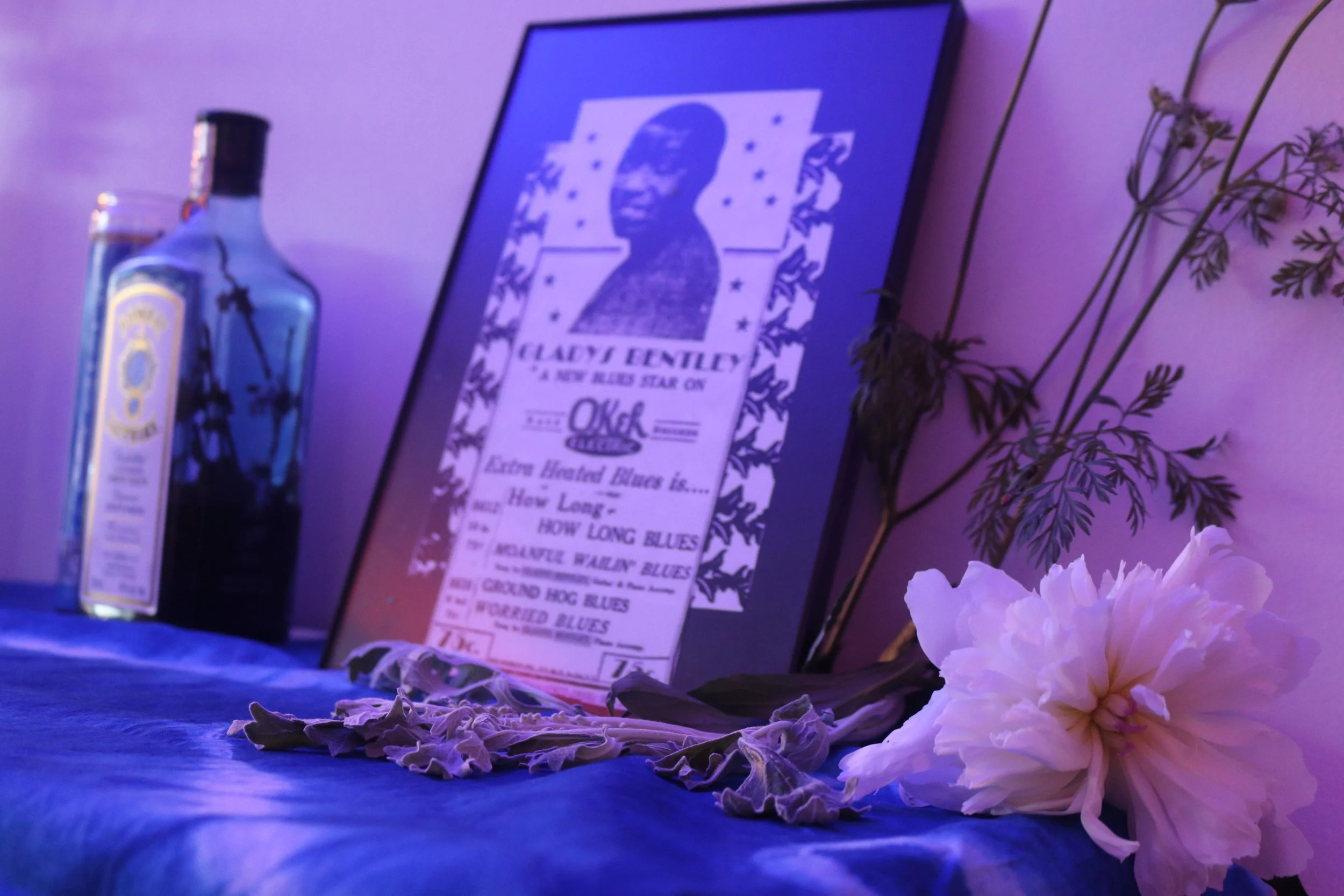
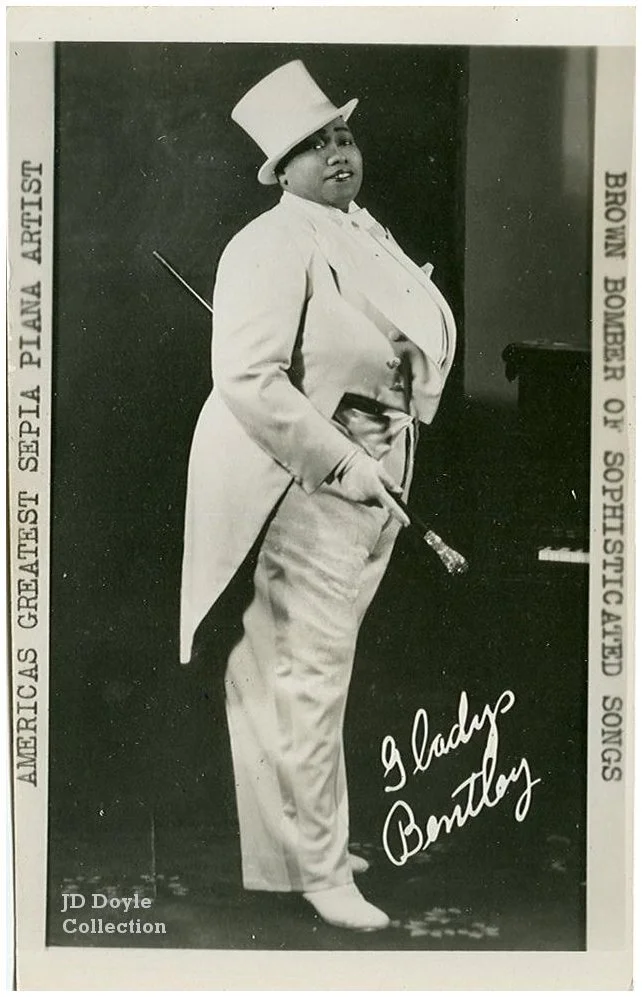
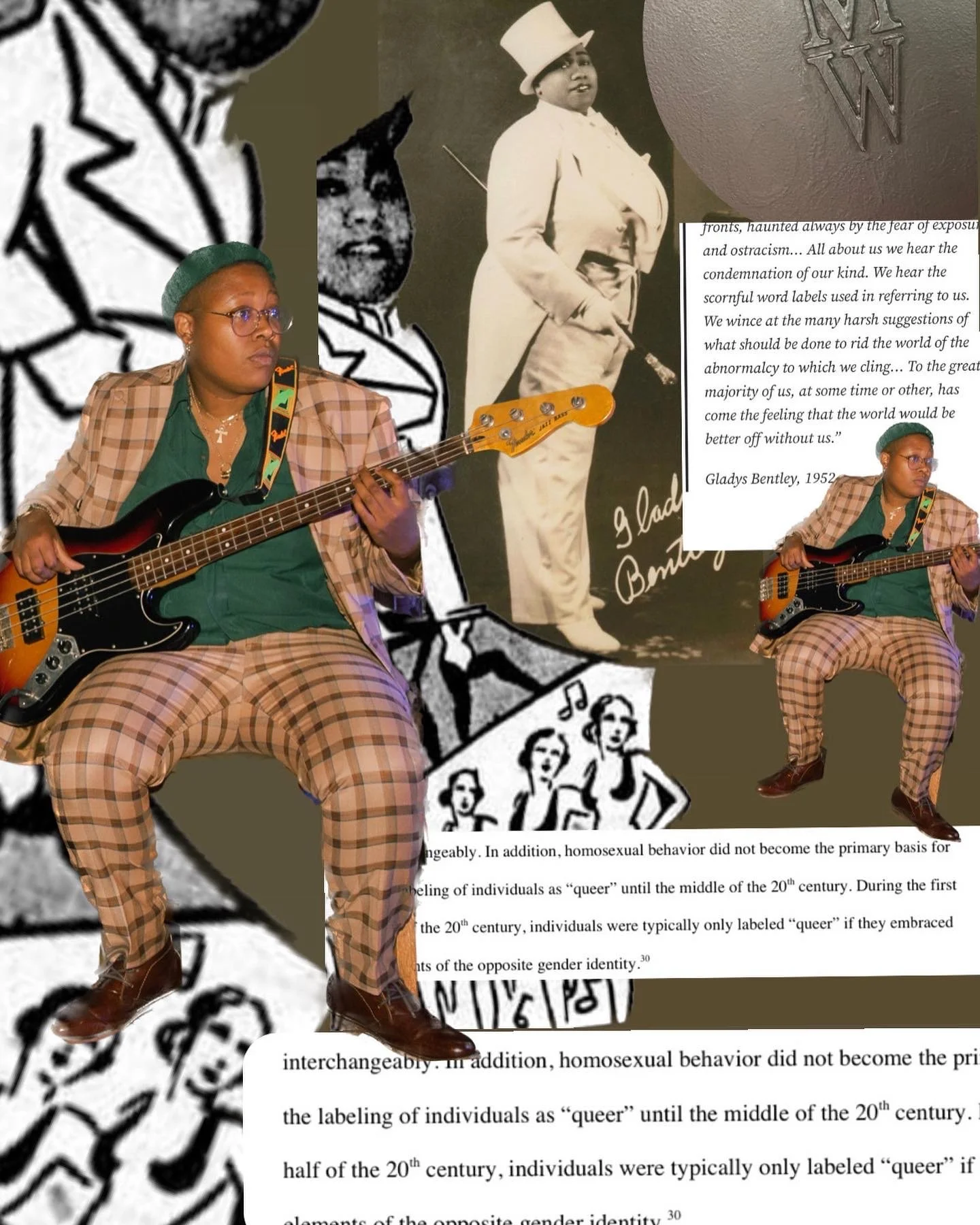
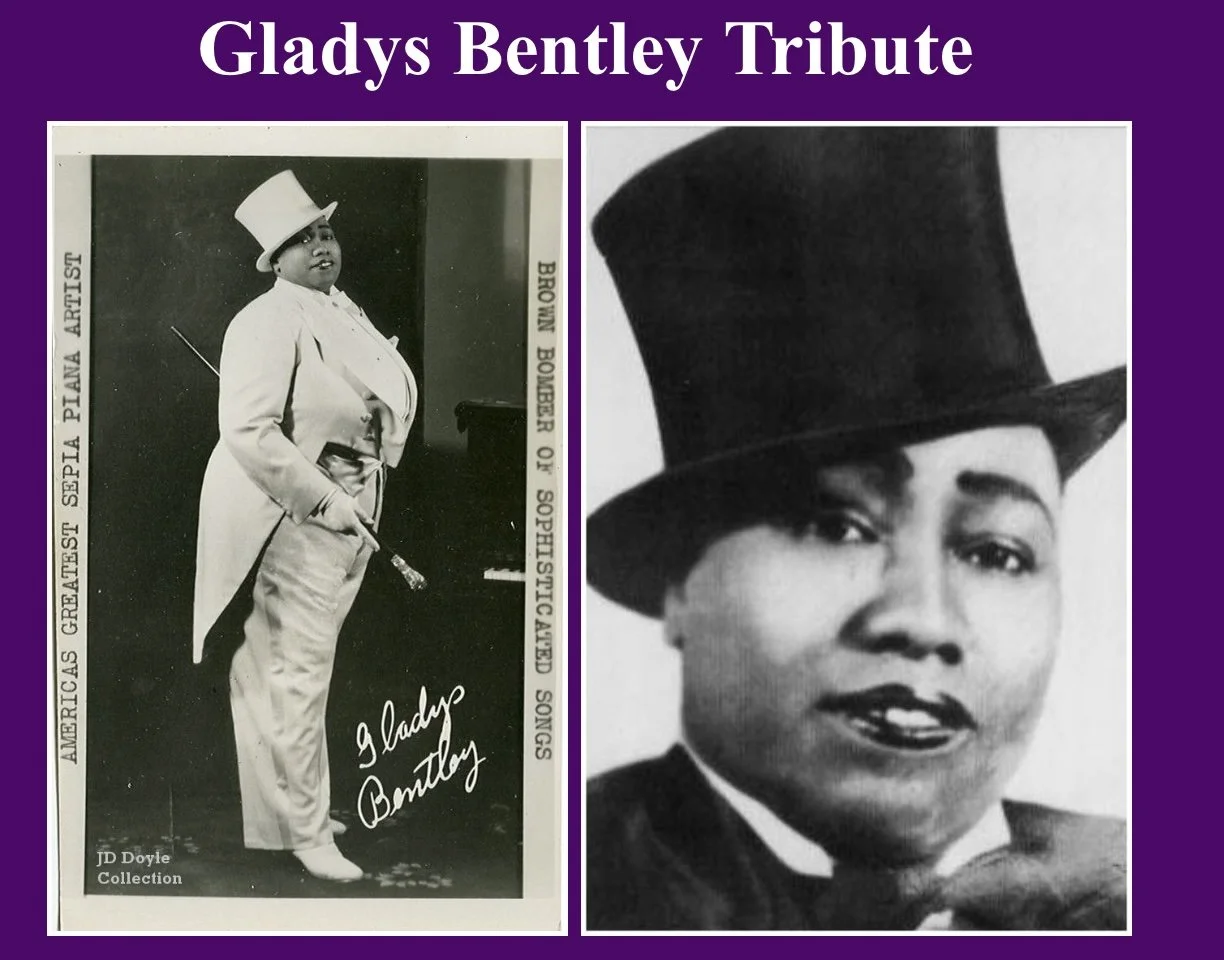
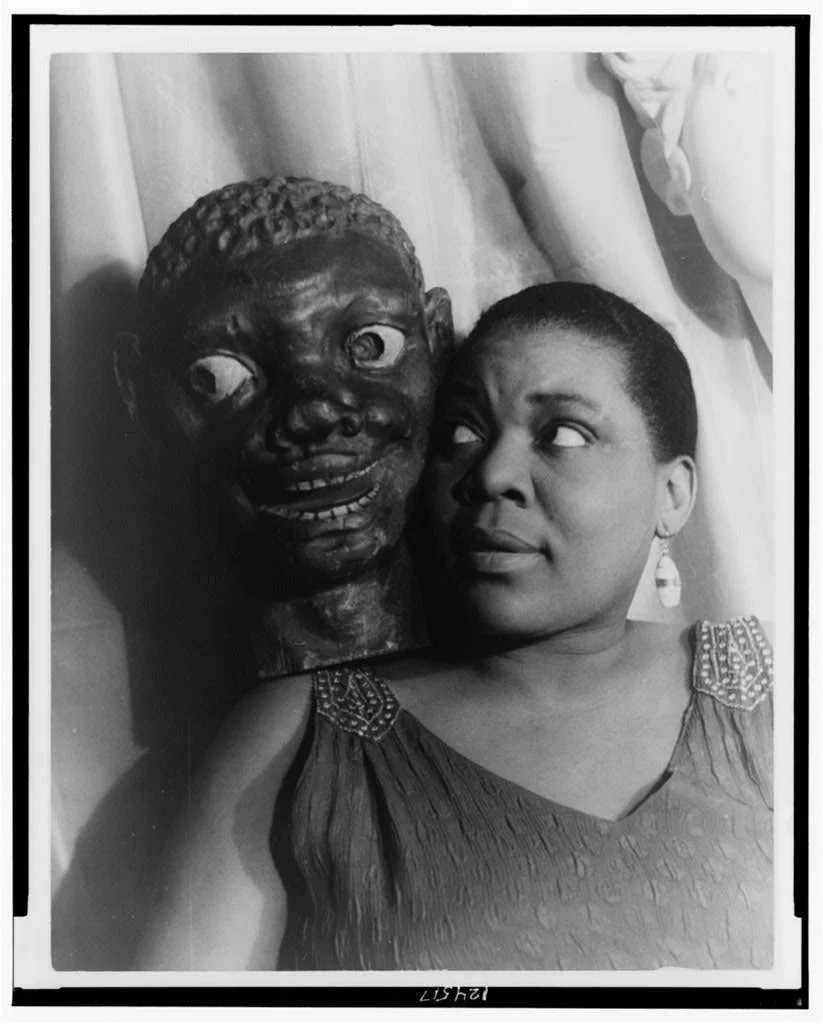
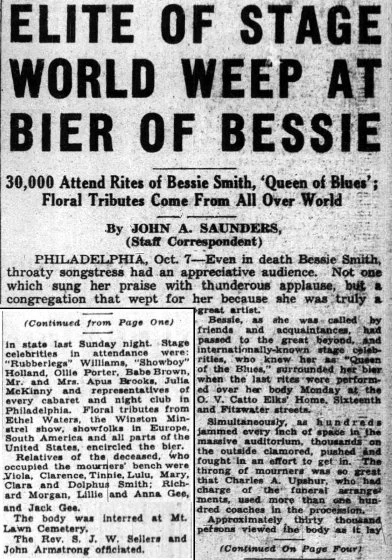
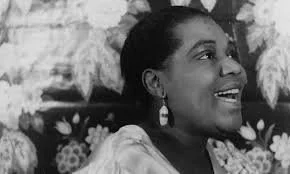
Blues legends like Gladys Bentley and Bessie Smith created worlds through their authentic expressions exploring a variety of themes including social subjection, tragedy, pleasure, class status, relationships, travel and more.
Archives of these figures works are cultural texts preserving diverse stories and dreams of Black life.
Gladys Bentley “Harlemania” at 1523 locust
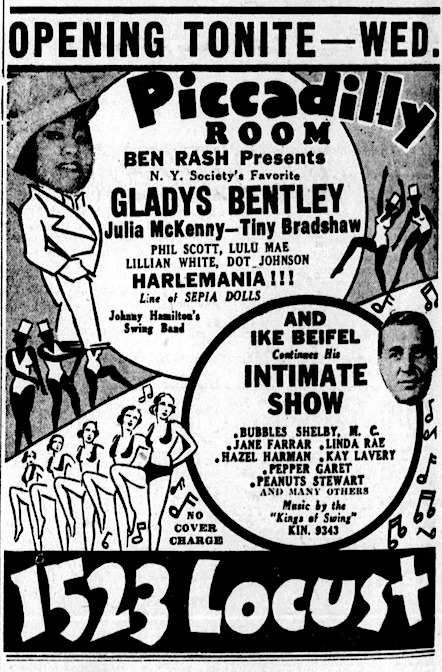
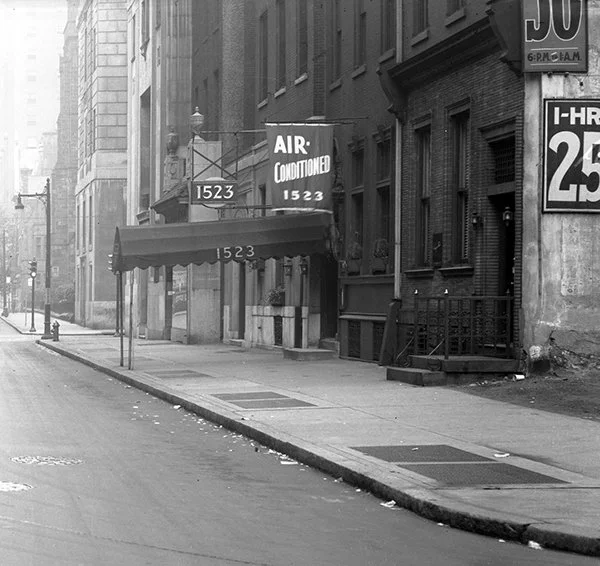
Locust Street at Sydenham Street, Looking West. July 9, 1940. Wenzel J. Hess, photographer. Advertisement in The Philadelphia Inquirer, May 12, 1937
Versions of Gladys Bentley’s Harlemania show toured across the country. Shooting to notoriety as a fixture of Harlem nightlife, the Philly shows were a homecoming for the artist, stamped by New York Society.
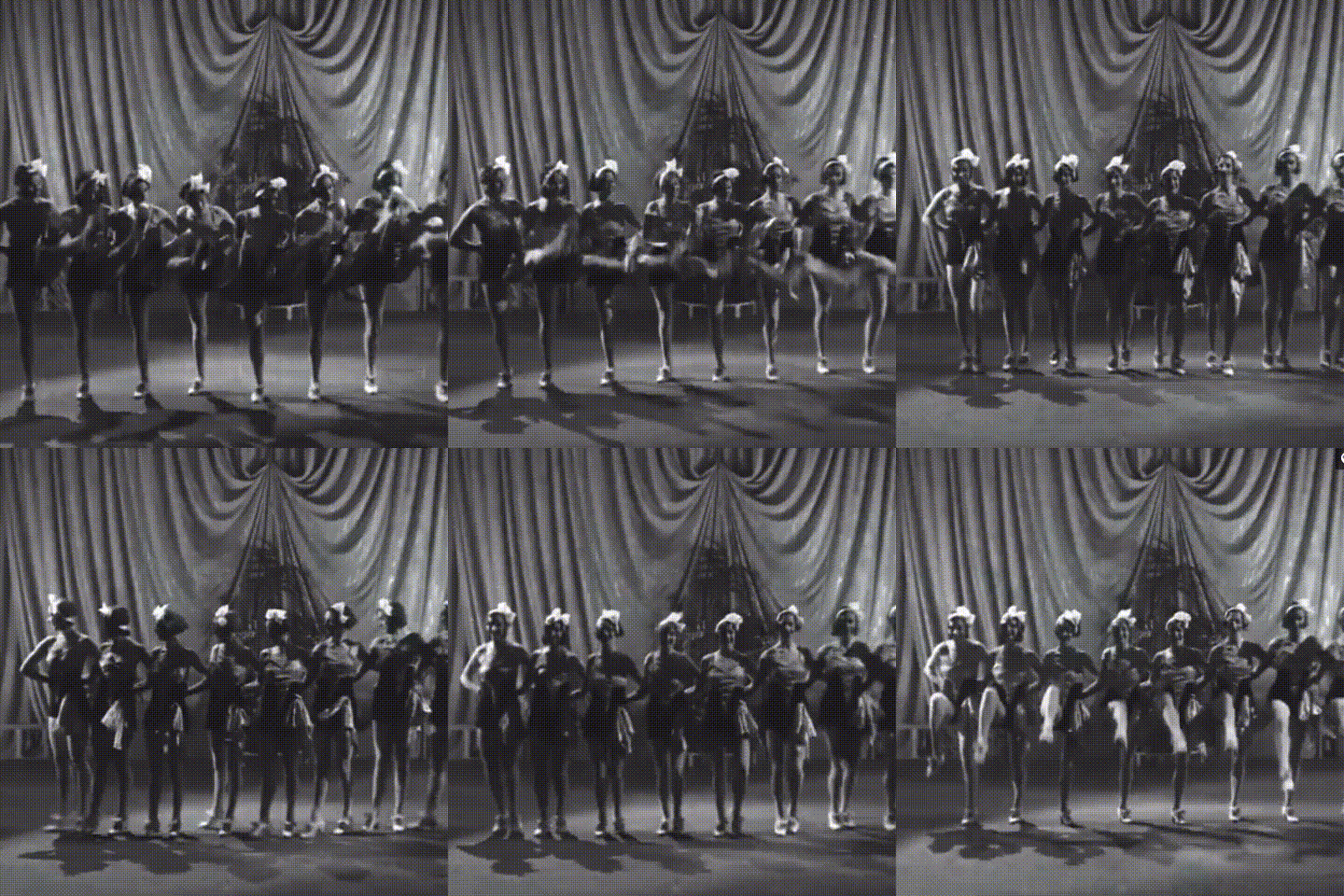
Appearing in a full suit, close cropped hair, and with a growling voice, Gladys was accompanied by a swing band and a line of dancers billed in most advertisements as “sepia dolls”.
Performing in a chorus line, the “seipia dolls” were as gender bending as Gladys, remembered in print drag artists, or simply flamboyant. A reporter in a 1930 review of Gladys show in the New York Age remarked “if these boys were put into dresses they would be indistinguishable from the chorines”. Illustrations of the Sepia Dolls are a design detail in many of the advertisement for Gladys’ shows.
May of 1937 found temperatures rising quickly leaving center city hot and a little sticky, but the hottest thing happening was Harlemania in the air conditioned 1523 club at 1523 Locust.
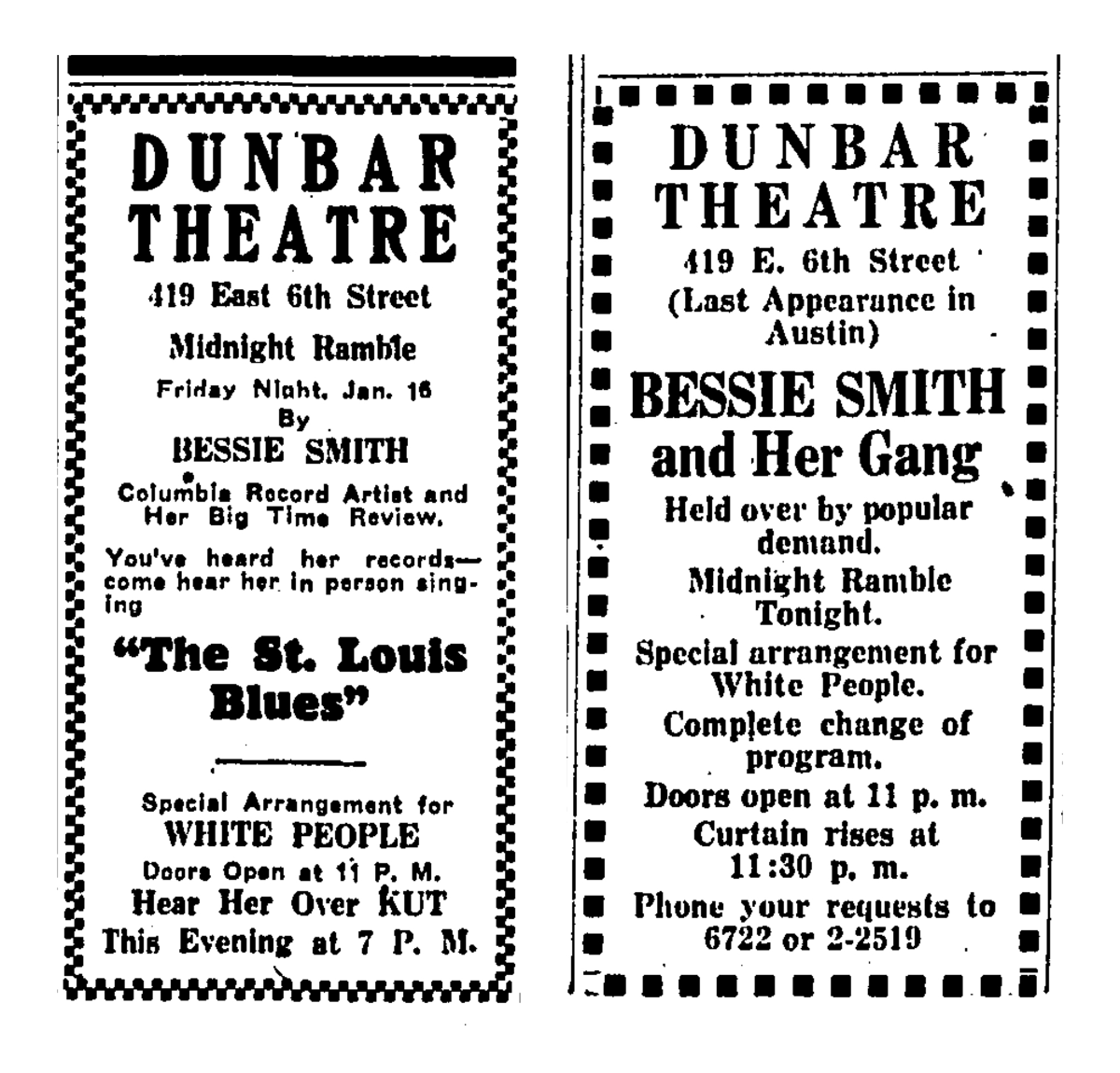
The Piccadilly Room was the intimate venue in the front room of the club who’s bookers catered to Black patrons. In a different part of the building, a different booker simultaneously catered to white audiences with their lineups.
It was one of the first venues to try this type of arrangement in the United States.
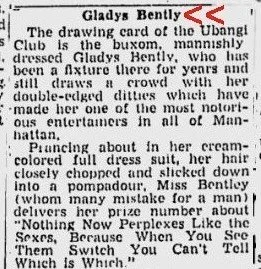
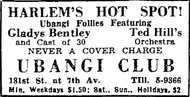

We are here because our ancestors were (and are) here!
We are here because our ancestors were (and are) here!
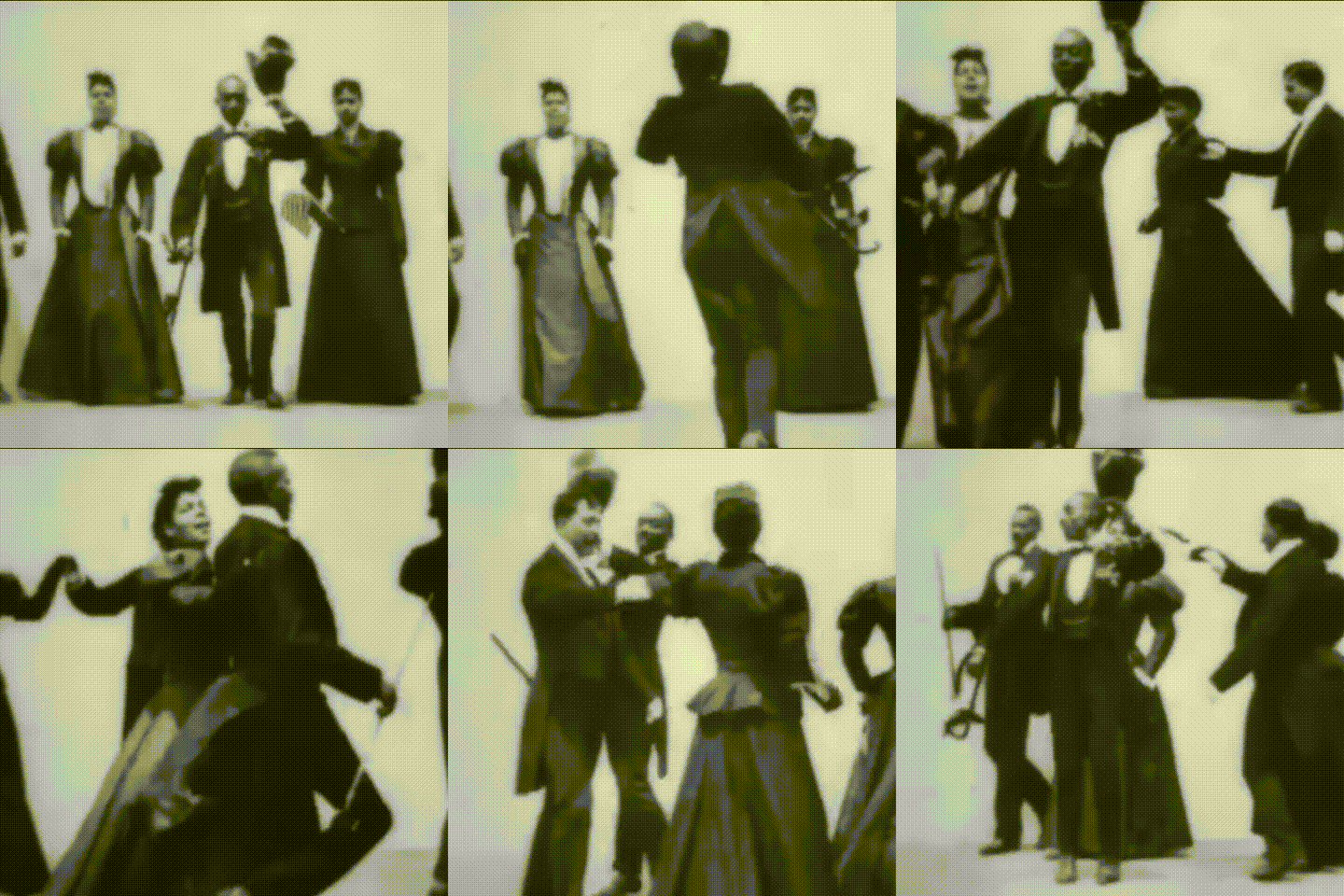
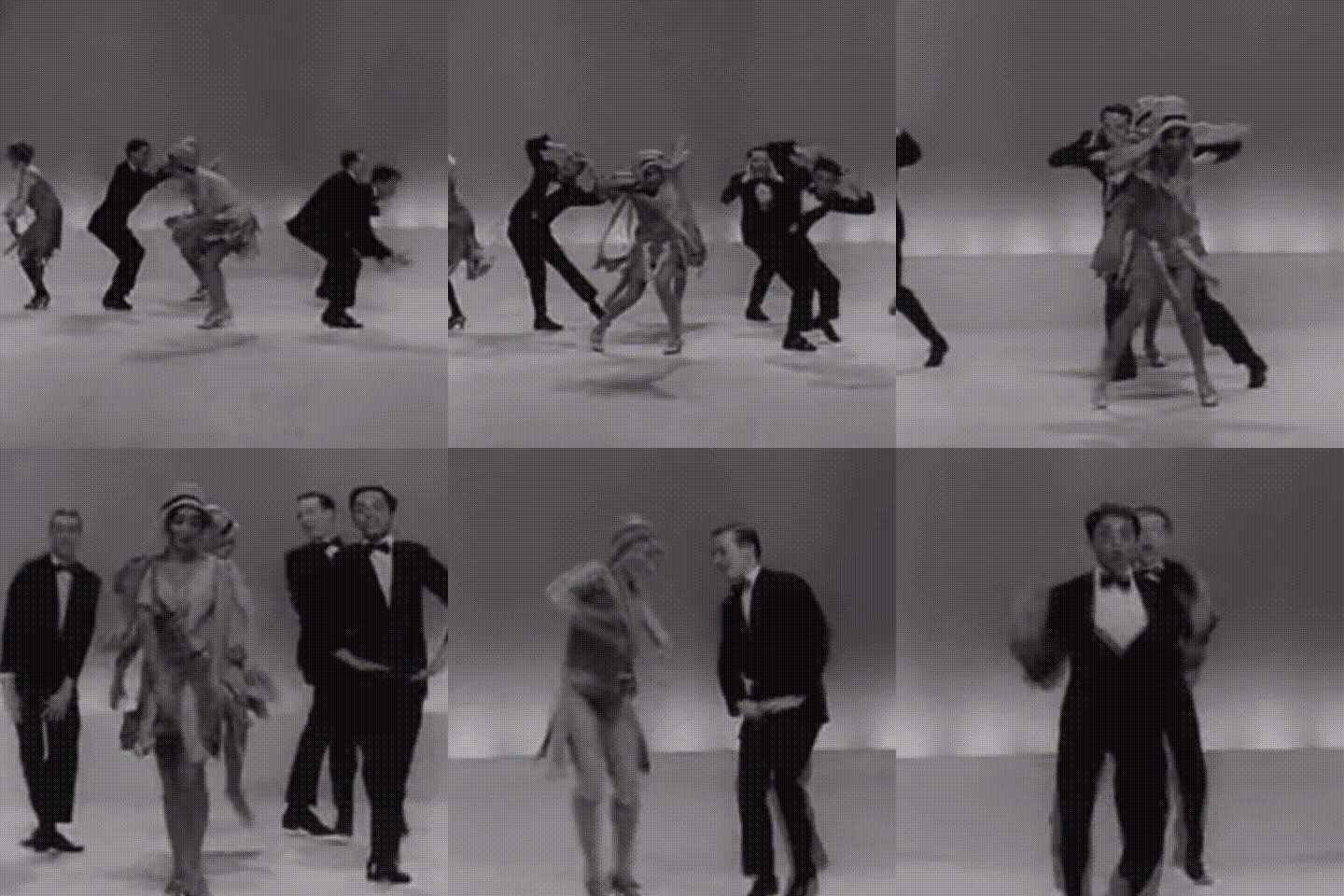
How it taste, smell , feel, sound, look like?
How it taste, smell , feel, sound, look like?
Archival Research Gallery

Black Blues Culture is supported by:
Black Music City Grant by REC Philly, WRTI, & WXPN 24’
Leeway Foundation Window of Opportunity 24’
Pink Noize Projects 23’-24’ Winter Artist Residency